Water treatment is becoming more modular and decentralized.
At the same time, new technologies are changing the way water is treated. Alongside digitalization and new methods for removing pollutants, decentralized and modular systems are gaining in importance. The management consultancy Roland Berger sees this as one of six growth trends that are likely to shape the water market in the coming years. This development is particularly interesting for industrial companies: Prefabricated systems can be installed directly on-site, commissioned relatively quickly, and expanded as demand grows. A significant part of the business model of the Australian water treatment company De.mem is based precisely on this principle.
The six growth areas in detail: These include, firstly, smart water analytics and smart water metering. Data analysis, artificial intelligence, and digital twins are intended to control systems more efficiently and identify maintenance needs early on. Smart meters also enable more accurate consumption measurement and help detect leaks.
Roland Berger sees a third growth area in stormwater management. In light of increasing extreme weather events, the need for digitally controlled solutions for managing heavy rainfall and flooding is growing.
A fourth trend is the treatment of new pollutants. This includes, in particular, per- and polyfluoroalkyl substances (PFAS). This large group of man-made chemicals is often referred to as "perennial chemicals" due to their high persistence in the environment. PFAS can enter groundwater and drinking water via industrial wastewater, landfills, or contaminated soils. Stricter limits and regulations for water quality are therefore increasing the demand for technologies that can remove these substances from water and wastewater.
The fifth area is new water sources. This includes seawater desalination and, in particular, the reuse of treated wastewater. According to Roland Berger, only about one percent of wastewater worldwide is currently reused – the consultants estimate the further potential to be correspondingly large.
Roland Berger identifies the modularization of water treatment as a sixth growth trend. This is based on a different principle than in traditional plant construction: The treatment plant is planned and standardized as much as possible in advance and manufactured and tested at the factory. Such "pre-engineered" systems are then transported to the site of use, for example, as skid-mounted or containerized solutions. There, they no longer need to be built from scratch, but can be connected and put into operation relatively quickly.
Prefabrication is intended to save costs and time
Roland Berger sees considerable economic advantages in this. The global market for mobile modular water treatment systems in the industrial sector is expected to grow from around US$1.2 billion in 2024 to US$1.8 billion in 2029 – an average of around nine percent annually. Compared to conventionally built on-site plants, prefabricated systems could reduce investment costs by up to 13 percent and save four to six months of construction and commissioning time, according to the study. Furthermore, additional modules can be added if water demand or production capacity increases.
Other industry analyses point in a similar direction. Bluefield Research increasingly sees smaller, decentralized water treatment and recycling systems as an alternative to large, centralized plants. An industry report by the Intesa Sanpaolo Innovation Center, based on data from Frost & Sullivan, also typically describes decentralized systems as modular or prefabricated. They can be installed directly where water is needed or wastewater is generated. The report describes the market as highly fragmented and identifies industrial applications as the largest segment.
De.mem relies on decentralized systems
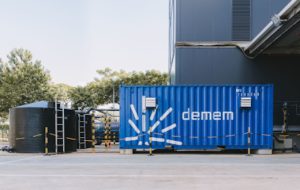
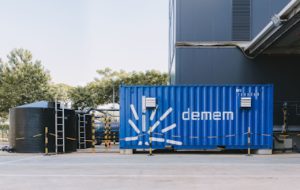
This very principle is reflected in the business model of the Australian water treatment specialist De.mem. The company focuses primarily on industrial customers in the mining, infrastructure, food processing, and other industrial sectors. Its water and wastewater treatment plants are deployed directly at the customer's site. De.mem describes its solutions as decentralized, containerized, packaged, or modular. The goal is to make the plants easy to transport and install on-site as turnkey solutions.
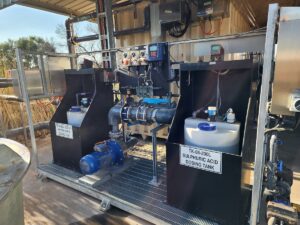
The company combines various treatment steps into complete systems. These include ultrafiltration, nanofiltration and reverse osmosis, membrane bioreactors, chemical dosing, media filtration, and pump technology. Depending on the application, the systems can be standardized or custom-designed and installed in industrial containers. In addition to the technology, De.mem offers operation and maintenance as well as financing and operating models.
This business model thus aligns in key aspects with the modularization trend described by Roland Berger: As much of the technical planning and manufacturing as possible takes place before the system reaches its final location. Instead of constructing a large, centralized water treatment plant, industrial customers can install decentralized capacities directly at their production site and expand them as their needs change. This combination of prefabrication, transportability, and modular expandability can be particularly attractive for remote mines, industrial plants, or other locations with limited water infrastructure.
De.mem has therefore established an approach that industry analyses now classify as one of the growth areas of the international water market.
Source: De.mem Limited