Clean water for the AI revolution: Why filtration is becoming increasingly important in data centers
Water Becomes a Key Factor in Modern Data Centers
Artificial intelligence is driving the construction of new data centers worldwide to record levels. But with increasing computing power comes an often underestimated challenge: server cooling. More and more operators are relying on water-based systems to efficiently dissipate the enormous amounts of heat. This brings into focus an issue that has mostly remained in the background until now – the quality of the water used and its crucial role in the performance, efficiency, and operational reliability of modern data centers.
Data centers are among the fastest-growing infrastructure segments worldwide. The increasing demand for cloud applications, streaming services, and especially artificial intelligence (AI) means that ever more powerful servers are being operated. These high-performance computers generate enormous amounts of heat, which must be reliably dissipated to ensure uninterrupted operation.
While conventional air cooling was sufficient for a long time, modern data centers are increasingly relying on water-based cooling systems. Water has a significantly higher heat capacity than air, thus enabling much more efficient cooling. Especially in AI applications with high computing density, direct-to-chip cooling or closed-loop water systems are being used more and more frequently.
Why Water Quality Determines Efficiency and Reliability
With the increasing importance of water-based cooling systems, the quality of the water used is also coming into focus. Even the smallest impurities can have significant long-term effects on the entire cooling infrastructure.
Minerals, limescale, suspended solids, or dissolved metals can clog pipes, heat exchangers, and cooling plates. This impairs heat transfer, pumps require more energy, and cooling performance decreases. In the worst case, corrosion or deposits form, which can cause costly repairs or unplanned outages.
In addition, there are biological contaminants such as bacteria or biofilms. These can colonize cooling systems and further impair efficiency. Therefore, operators are increasingly relying on multi-stage filtration and water treatment systems that reliably remove particles, microorganisms, and dissolved substances from the cooling water.
Sustainability is becoming a competitive factor
In addition to operational reliability, sustainability is playing an increasingly important role. Data centers are under growing pressure to reduce their energy and water consumption. Modern water treatment makes it possible to use cooling water in closed loops for longer periods and significantly reduce the need for fresh water.
High-quality filtration also reduces the need for water treatment chemicals and extends maintenance intervals. This not only lowers operating costs but also improves a data center's environmental footprint. This aspect is gaining considerable importance, especially in regions with increasing water scarcity.
New opportunities for water technology specialists
The global expansion of digital infrastructure is simultaneously creating an attractive growth market for companies specializing in water filtration and industrial water treatment. Compact, energy-efficient systems that can be integrated into existing cooling concepts and simultaneously meet the highest purity requirements are in demand.
Membrane filtration, ultrafiltration, and other modern water treatment technologies offer the potential to keep cooling circuits permanently clean and extend the lifespan of sensitive components. For operators of large data centers, water quality is therefore increasingly becoming a strategic component of their infrastructure management.
AI Accelerates the Trend
The expansion of high-performance AI data centers is likely to further accelerate this trend in the coming years. Modern graphics processing units (GPUs) are achieving power densities that are hardly manageable economically with conventional air cooling. Liquid cooling is therefore considered a key technology for the next generation of high-performance data centers.
With each new expansion stage, the importance of reliable water treatment increases. The higher the power density of the hardware, the greater the demands on constant cooling performance and maximum operational reliability.
Clean Cooling Water as the Key to Success
Water is thus increasingly becoming a strategic resource for the operation of modern data centers. As digitalization and the AI boom continuously increase the demand for high-performance cooling systems, the quality of the cooling water is becoming a crucial success factor. Efficient filtration protects systems from deposits and corrosion, improves energy efficiency, and contributes to the more sustainable use of water resources. This opens up a market for data center operators as well as providers of innovative water technologies, a market whose importance is likely to continue growing in the coming years.
Experienced companies see opportunities
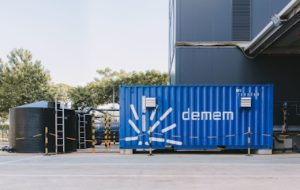
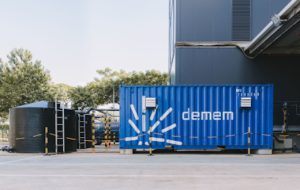
This is precisely where De.mem could benefit from a growing future market. The Australian company has expertise in membrane filtration and industrial water treatment. Technologies such as ultrafiltration and reverse osmosis help to keep cooling water stable, prevent deposits, and extend the lifespan of cooling systems.
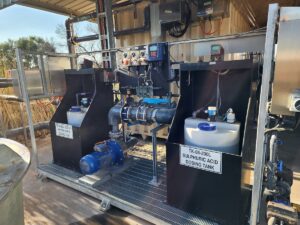
De.mem also supplies chemicals such as descaling agents and corrosion inhibitors, which are required for the ongoing operation of cooling circuits. With its service business, De.mem can provide a complete range of solutions for data center operators and manage entire cooling circuits for its customers.
As data centers increasingly rely on closed and efficient water circuits, the demand for corresponding water treatment is likely to continue rising. This presents De.mem with the opportunity to transfer its expertise to a dynamically growing market.
"Artificial intelligence is changing our world at a pace that we would hardly have thought possible just a few years ago. What is often overlooked is that every AI application relies on a high-performance infrastructure – and this infrastructure needs clean water," explains De.mem CEO Andreas Kröll. "We are convinced that water treatment will play a key role in the reliable operation of modern data centers in the future. With our many years of experience in membrane filtration and industrial water treatment, we have technologies that can create real added value precisely in this area. For us, this is an exciting future market with great potential."
Source: De.mem-GeUTec GmbH