De.mem: Fragmented but emerging water market offers opportunities

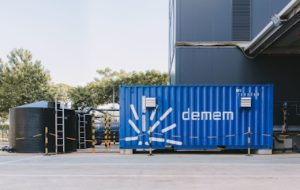
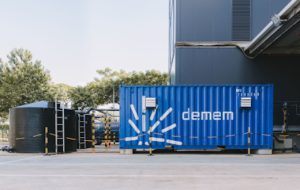
The market for water treatment solutions is growing rapidly, but at the same time is extremely fragmented, with a multitude of different providers. One of these is De.mem, which operates internationally with its decentralized water treatment systems and membrane technology. (Image source: De.mem-GeUTec GmbH)
One of these is De.mem, which operates internationally with its decentralized water treatment systems and membrane technology. In recent years, the Australia-based company has acquired several of its competitors and now sees further opportunities.
"The biggest future challenges facing the water market include the increasing demand for clean water, while available water supplies are becoming increasingly unpredictable due to the effects of climate change, as well as concerns about new contaminants that require more stringent treatment methods," explains David Chua, who has worked for De.mem since the company's founding and has been the Managing Director of De.mem's operations in Singapore since 2019. In addition to customer support in Singapore, he is also responsible for membrane research and development.
International studies support Chua's statements: According to Global Market Insights Inc. (GMI), the global market for water treatment equipment will be worth approximately USD 65.1 billion in 2023 and is expected to grow to USD 106 billion by 2032. The growing demand for effective water treatment solutions is primarily driven by population growth, stricter environmental regulations, and technological advances.
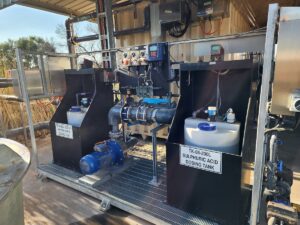
Decentralized water treatment systems are increasingly gaining attention and are being used not only in households but also in industrial applications, such as the chemical industry, food processing, and mining.
In the private sector, consumers are increasingly concerned about water contamination due to outdated infrastructure. A good example can be seen in the USA: According to Aquasana, a water system provider based there, 77 percent of Americans are expected to have filtered their drinking water at home in 2022. In 2021, the figure was 74 percent.
Technological progress as a growth driver
New filtration options such as microfiltration, ultrafiltration, and nanofiltration membranes are increasingly replacing traditional filtration methods such as sand filters. These technologies offer improved removal of even the smallest particles, such as viruses and bacteria. Self-cleaning and automated functions are also enjoying growing popularity as they increase productivity and reduce maintenance costs.
According to GMI, the most important players in the market are A.O. Smith Corporation, Evoqua Water Technologies, Kurita Water Industries Ltd., and Pentair plc, which together held a 15 to 20 percent market share in 2023. However, this shows that the market is highly fragmented. The current development of the market due to the increasing demand for state-of-the-art technology, including membrane materials, makes it attractive to new entrants. Among the many smaller companies active in the market is the Australian provider De.mem, which has benefited significantly from the structural changes in the industry in recent years and has grown through numerous acquisitions.
Acquisitions boost company success
De.mem is therefore consistently pursuing its strategy of acquiring and integrating high-margin companies. The company has a strong track record of success in acquisitions, with an average revenue growth of 69 percent from four acquisitions completed between 2019 and 2022.
As already described, the company operates in a highly fragmented sector in which numerous local niche players cannot compete with De.mem's national reach, proprietary technologies, and comprehensive "one-stop shop" offering.
De.mem benefits from the new gold rush in Australia through acquisitions
The company's two most recent acquisitions continue to perform strongly and contribute significantly to growth: Border Pumpworks (acquired on May 1, 2024), based in Wodonga in regional Victoria, supplies industrial customers in regional Victoria and New South Wales.
Auswater Systems (acquired on July 2, 2024), based in Perth, Western Australia, serves more than 50 regular customers, primarily from the Western Australian mining industry, in the area of water and wastewater treatment systems. The emerging boom in gold mining is therefore also having a positive impact on De.mem as a wastewater system supplier.
In this interview, David Chua explains the company's development and market opportunities:
Mr. Chua, you have been with De.mem for many years and have followed the company's development closely. How have you personally experienced this development, and what do you consider the decisive factor in De.mem's success?
I have been working for De.mem in Singapore since 2017. During these years, I have witnessed the company's continuous improvement. We have established and expanded important customer relationships. Furthermore, we have successfully validated and established our key technologies and products, such as our graphene oxide-reinforced hollow-fiber membrane. This technology received NSF (National Sanitation Foundation) approval for the US in 2024, representing a significant milestone for our company. The key to our success is our broad range of expertise and the unique ability to combine our membrane technologies with the ability to offer water and wastewater treatment services to our residential and industrial customers from a single source.
How can De.mem leverage its decentralized approach to gain a competitive advantage?
Our technological edge and the high quality of our services enable us to leverage our offerings to the fullest. Our decentralized approach means we often work with flexible, containerized solutions for our customers. These are tailor-made, meaning they are specifically designed for the specific type of water or wastewater at the customer's facility. Over the years, we have proven that our products and services are extremely reliable and that we are able to offer efficient solutions for customers from many industries, including food and beverages, industrial manufacturing, and oil and gas.
What do you see as the biggest future challenges for the water market?
The development described above is creating considerable pressure for companies that require large amounts of water in their production. There is therefore a shift towards decentralized, on-site treatment solutions, as these are significantly more flexible and better able to address the aforementioned trends. This is increasing the importance of practical, efficient, and local solutions – areas where De.mem's proprietary membrane technology, containerized systems, and customized service model can add value by reducing operational complexity and improving reliability.
Source: De.mem-GeUTec GmbH