Lutz-Jesco Presents Water Technology for Sustainable Greenhouses of the Future
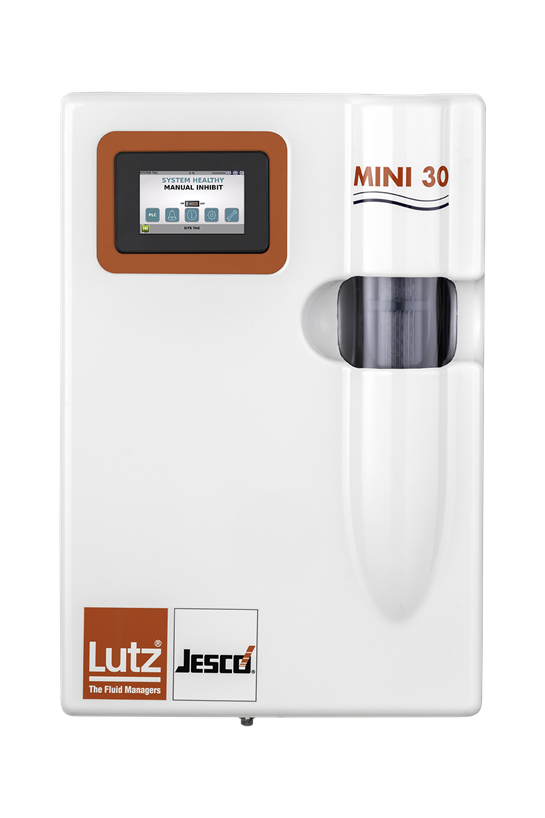
Safely produces sodium hypochlorite from table salt and water: the Minichlorgen T electrolysis system (image source: Lutz-Jesco GmbH)
These systems promote healthy plants, stable yields and sustainable operation. This has been proven, among others, by Dutch greenhouse specialist Royal Brinkman.
Plants in greenhouses require a consistent and precisely balanced supply of nutrients through irrigation. However, old pump models or manual dosing methods are quick to show their limitations. “Flow rates fluctuate and intervals are difficult to automate. The result: an unreliable supply, stress for the plants and increased effort for the user,” says Michael Raabe, Head of Sales at Lutz-Jesco GmbH, speaking from experience. Dosing pumps from the Magdos series, on the other hand, give greenhouse operators more options: for example, an integrated, programmable control system for the automated supply of liquid fertilisers, chelates and trace elements at intervals. “This automation promotes stable growing conditions for healthy plants.
Successful use at Royal Brinkman
One of the users of the Magdos dosing pump is Royal Brinkman, a greenhouse technology supplier from the Netherlands founded in 1885. The company uses the technology in a water treatment plant for horticulture. The dosing pumps supply the plants with nutrients via irrigation. At the same time, they introduce hydrogen peroxide, an agent that eliminates harmful microorganisms and decomposes into water and oxygen in an environmentally friendly manner after use.
“The solution reduces the user's daily effort, as dosing can be carried out automatically at set intervals,” says Michael Raabe. “This saves time, reduces personnel costs and simplifies processes in the greenhouse.”
Fruit and vegetables: Producing chlorine for washing water from standard table salt
At Agritechnica, Lutz-Jesco will also be presenting solutions for sustainable water disinfection in agriculture. This is important, for example, when manufacturers have to wash fruit and vegetables with disinfected water before packaging in order to meet hygiene requirements. The handling and storage of chlorine in tanks or canisters poses considerable safety risks. There is a danger of leaks and vapours that can harm people and the environment.
“A safe alternative is to produce the disinfectant directly on site, for example by electrolysis from conventional table salt and water,” explains Michael Raabe. For this type of sodium hypochlorite production, Lutz-Jesco will be presenting the Minichlorgen T electrolysis system at Agritechnica 2025. Employees simply need to fill the salt dissolving tank, which is a safe task. In water, sodium hypochlorite then forms free chlorine, which inactivates most microorganisms.
The electrolysis system is operated safely and intuitively via an integrated control system with touchscreen. “The system requires neither protective equipment nor special training and significantly increases safety in operations. Farmers can also choose to expand the system with the Easy Pro water measurement panel, which automatically monitors the most important water parameters and protects against over- and under-dosing.
Agritechnica 2025 will take place in Hanover, Germany, from November 9 to 15.
Source: Lutz-Jesco GmbH