World Water Day 2025: Technology for the Development of Alternative Sources of Drinking Water
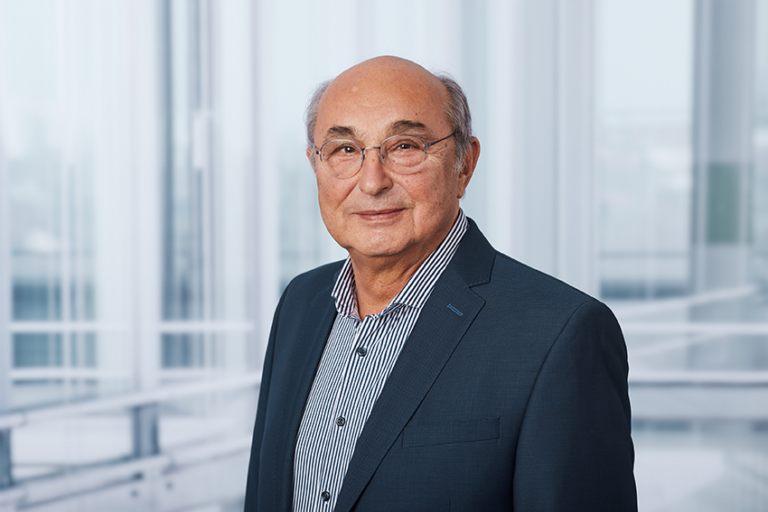
Heinz Lutz, CEO of Lutz-Jesco (Image source: Lutz-Jesco GmbH)
Nevertheless, it is important to be prepared for alternative sources of drinking water in order to be able to guarantee the future supply of water for millions of people. This is an insight shared by Heinz Lutz, CEO of Lutz-Jesco, a company from Wertheim that specialises in drinking water technology.
Climate change means that glaciers are currently in retreat across the world. As a result, many regions are currently losing these dynamic reservoirs that are responsible for effecting the cyclical replenishment of rivers and groundwater aquifers with fresh water. “Glaciers are an important source of drinking water in many areas of the world, such as parts of Asia, South America and Europe. It is therefore crucial for the people affected that we act to slow down the dramatic decline in the ice masses — in particular by reducing CO2 emissions,” explains Heinz Lutz, CEO of Lutz Holding GmbH. “The regions affected should also prepare to make greater use of alternative sources of water such as rainwater and surface water. However, since these sources can often be more heavily contaminated with pollutants, microplastics and chemical impurities, technologies for safe water treatment are of central importance in achieving this aim.”
Mobile chlorination systems enable the rapid disinfection of drinking water, for example in remote regions
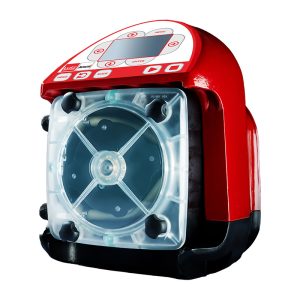
For decades, Lutz-Jesco has been developing cutting-edge water treatment technology for deployment in drinking water plants around the world, including filter, disinfection and dosing systems. Its portfolio also includes mobile technologies that come into their own when treating alternative water sources. One example is SAFETYCHLORMIX. A plug-and-play chlorination system mounted on a pushcart, a single person can transport it to wherever emergency chlorination is needed and start work straight away. At the core of the system is a MAGDOS series diaphragm dosing pump that doses a calcium hypochlorite solution into contaminated water to kill or deactivate bacteria, viruses and other microorganisms. “The mobile design of the system means that it can be deployed flexibly, especially in areas requiring the fast and reliable disinfection of drinking water – for example, for the supply of remote regions or the implementation of measures needed at short notice,” says Lutz.
A new control cabinet operates disinfection systems with solar energy
With Solarhub, a solar power plant that powers pumps and disinfection systems, it is now possible for Lutz-Jesco disinfection systems for the treatment of drinking water to be deployed in locations lacking an electricity supply. “Our solar power system is fully pre-configured with all the components required for operation. This includes solar panels, a storage battery, a battery charge controller, an inverter and the cabling,” says Lutz. The perfect alignment of all components obviates the need for users to get to grips with complex technical details. Instead, they can set to work with the solar power plant straight away and depend on its reliability. “In times of glacial retreat, technologies such as these can help in the development of alternative sources of drinking water, especially in remote areas.”
Source: Lutz-Jesco GmbH