Completion of Operational Testing for Electric Turbo Pump for Rocket Engines
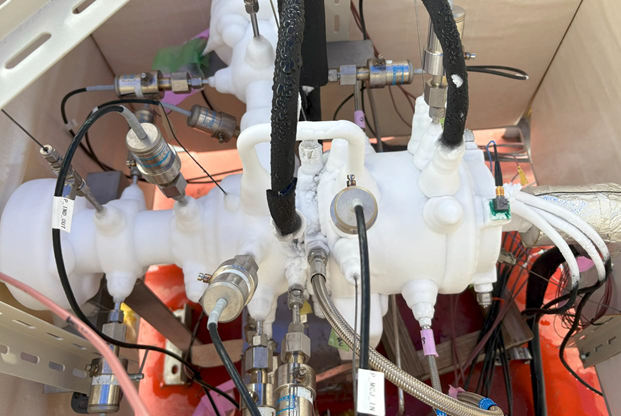
Testing Process (Image source: EBARA Corporation)
1. Background and Objectives
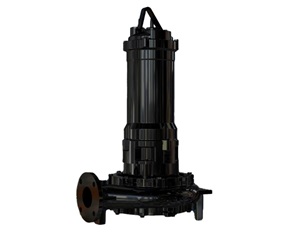
With the mission of “Making the connection between people and space a matter of course,” EBARA launched its space business initiatives in 2021. Since then, it has been developing an electric turbo pump (hereinafter: this development product) to supply fuel to rocket engines, aiming to contribute to establishing low-cost, highly flexible transportation methods.
The bipropellant liquid-fueled rocket, which is intended to incorporate this development product, operates by pumping fuel and oxidizer from separate tanks into the combustion chamber via turbo pumps. It generates high thrust by ejecting the resulting high-temperature, high-pressure combustion gases. This system is used worldwide.
However, the turbine-driven pumps currently installed in rockets present challenges: they are high-cost, structurally complex, and difficult to operate.
In contrast, EBARA's electric turbo pump employs a new method where a motor is driven by power from an onboard battery. This simplifies the engine system compared to conventional pumps and enables easy output control.
Performance testing using liquid nitrogen, which has properties similar to the actual liquid fuel, was completed in September 2024.
2. Overview
This test involved operational testing using actual liquid. The test confirmed the pump operates stably, with no abnormal vibrations, no leakage of liquefied natural gas or liquid oxygen, and the target rotational speed and planned data were successfully measured.
Test Name: Electric Turbo Pump Actual Liquid Test
Purpose: Verifying performance and integrity at rated rotational speed using actual liquid
Test Period: June 17, 2025 – August 1, 2025
Location: EBARA Futtsu District
Details: Measure flow rate, pressure, rotational speed, etc., to verify the electric turbo pump's performance matches design specifications during actual liquid use
3. Future Developments
Moving forward, we will advance detailed design and testing aimed at further performance improvements, targeting practical application by 2028. Furthermore, integrating this developed product into rocket engines is expected to simplify engine systems, enhance reliability, enable precise output control, and make space transportation more accessible.
Source: EBARA CORPORATION