Winterizing Vacuum Pumps – 6 Essential Maintenance Tips from Busch
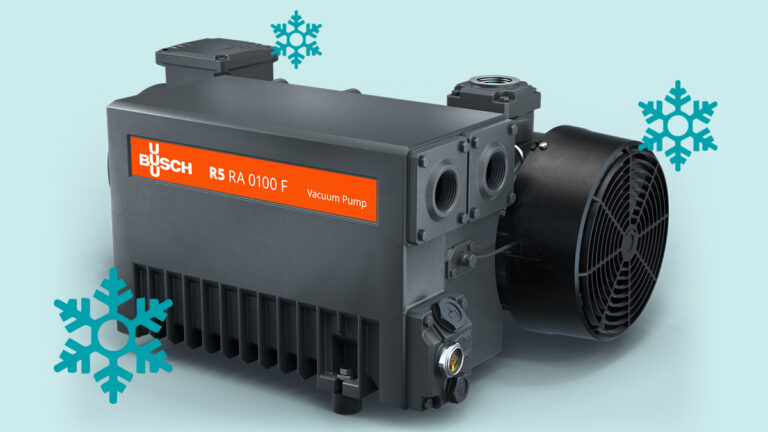
Busch provides important maintenance tips to ensure that vacuum pumps function optimally even in the colder months. (Image source: Busch Vacuum Solutions)
The experts of Busch Vacuum Solutions understand the importance of winterization in preventing corrosion, freezing, and other potential damage. In this guide, they will share invaluable tips to ensure vacuum pumps continue to operate optimally during the colder months.
1. Periodic start-ups
Much like a car engine, vacuum pumps left idle, especially in cold weather, benefit from occasional start-ups. This practice ensures the distribution of oil on lubricated components, preventing corrosion. Additionally, periodic warming of the pump helps clear any condensation, further mitigating the risk of corrosion.
2. Oil changes
Lubricating oil can thicken over time, exacerbated by the presence of contaminants. Cold weather can further increase the viscosity of the oil, leading to a higher starting current being required, potentially causing inconvenient power trips. A servicing of a vacuum pump, including an oil change, should be considered before anticipated cold weather or a shutdown. Changing to fresh oil at the end of a season removes contaminants, providing superior protection to lubricated components. Certain special vacuum pump oils are also available with improved corrosion resistance and can help to protect vacuum pumps during wintertime.
3. Coolant
For pumps with coolants, such as COBRA dry screw vacuum pumps, annual coolant changes are recommended to prevent degradation that may impact the fluid’s ability to prevent freezing. Certified premixed coolant with known performance properties, concentration and corrosion protection is recommended.
4. Water-cooled pumps
In pumps directly cooled with water, continuous water flow during cold weather to prevent freezing should be ensured. Draining the water from the pump during extended periods of inactivity, especially in sub-zero temperatures, is good practice to avoid potential freezing and subsequent damage.
5. Insulation and heat tracing
It's important to regularly inspect the condition of lagging materials that provide heat insulation to vacuum pumps and associated pipework. It is important to look for signs of damage, wear, or moisture ingress, and confirm secure installation. Special attention is necessary to areas where lagging may have been removed for maintenance or where accidental damage could occur. For systems with heat tracing, it has to be ensured it functions correctly. Using a thermal imaging camera to identify hot spots, especially if heat tracing is absent, should be considered. Meaningful thermal imaging results without heat tracing require the contents to be hotter than the ambient temperature.
6. Filtration maintenance
Filtration systems that collect water to prevent freezing-induced cracking should be regularly checked and emtied. Those with polycarbonate bowls can be especially brittle and prone to cracking. Water-separating filters should be emptied before any shutdown to avoid complications during inactive periods.
Source: Dr.-Ing. K. Busch GmbH