Water Reuse Drives Growth: De.mem Increases Revenue and Profitability
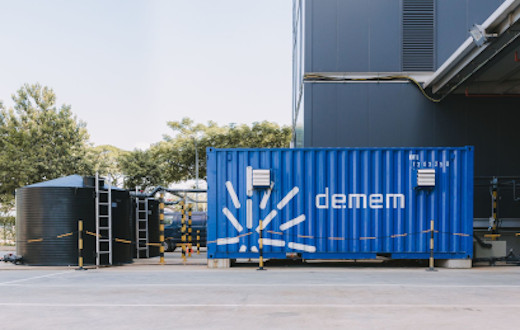
Image source: De.mem Limited
Water reuse is increasingly becoming an integral part of industrial water supply. According to the World Bank, global water reuse capacity has tripled in the past two decades. Currently, the sector is growing by almost 7 percent annually. By 2040, municipal and industrial water reuse could reach approximately 430 million cubic meters per day. The World Bank estimates the associated investment potential at up to US$340 billion.
For industrial companies, this is not just about water scarcity. Treatment and reuse can reduce dependence on freshwater and simultaneously help comply with wastewater discharge regulations. Accordingly, the demand for treatment plants, membranes, specialty chemicals, and maintenance and operational services is growing.
Australia invests in water recycling
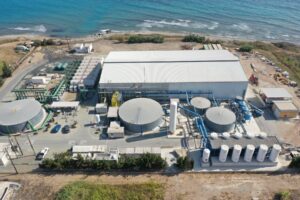
The extent to which this development is becoming more concrete is demonstrated, among other places, in Australia, an important market for De.mem. In Western Australia, an investment of AUD 81 million was announced for the expansion of the Kwinana Water Reclamation Plant in 2026. The additional treated wastewater will be available there for various purposes, including raw material processing, energy applications, and the production of green iron and steel. At the same time, this will reduce the strain on groundwater and drinking water resources.
Against the backdrop of the dynamic developments in Western Australia, De.mem continued its growth in the first half of 2026. Revenue increased by 26 percent year-on-year, from AUD 14.0 million to AUD 17.6 million. Cash receipts rose by 28 percent to AUD 20.0 million. According to the company, this marks the 29th consecutive quarter of year-on-year cash receipts growth.
Profits grow faster than revenue
The development of profitability is particularly noteworthy. Adjusted EBITDA increased from AUD 556,000 in the first half of 2025 to AUD 1.58 million. The adjusted EBITDA margin thus rose from just under 4 percent to approximately 9 percent. The gross margin was 41 percent.
Cash flow also improved. De.mem generated positive operating cash flow of AUD 928,000 in the first half of the year. By comparison, it was AUD 318,000 for the entire 2025 financial year. At the end of June, the company had cash and time deposits totaling AUD 4.3 million.
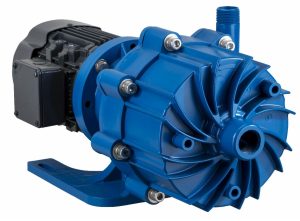
The structure of the business plays a key role in this. According to the company, around 90 percent of incoming payments come from recurring revenue streams. These include, among other things, maintenance and operating contracts, replacement membranes, specialty chemicals, pumps, and consumables. This makes De.mem less dependent solely on winning individual large-scale plant projects.
Germany Contributes to Growth
The German subsidiary De.mem-Geutec also contributed to growth. It achieved sales of approximately AUD 2.5 million in the first half of the year, reaching a record result according to the parent company. However, the largest revenue driver remained the business in Western Australia. Including the specialty chemicals business, this accounted for around 49 percent of the group's sales.
De.mem expects its growth trajectory to continue for the full year. The decisive factor will be less the number of new sales records than whether the company can maintain its recently significantly improved profitability and positive operating cash flow even with further growth. The structurally growing market for industrial water treatment and water reuse offers a fundamentally favorable environment for this. “We are very pleased that we were able to significantly increase the De.mem Group’s revenue by 26 percent compared to the same period last year, while profitability, as measured by EBITDA, has almost tripled. This is also due to the fact that, driven by strong demand from the gold mining sector in Perth and Western Australia, we now have a very solid core business. Our sales pipeline is extensive, and the outlook for the remainder of 2026 and 2027 remains positive,” explains De.mem CEO Andreas Kröll.
Source: De.mem Limited