Chlorine Gas Systems: New Electric Safety Valve Makes the System Safer

13.12.2024
Chlorine gas plays a key role in the disinfection of drinking and industrial water. However, handling the chemical can pose considerable health risks – from irritation of the eyes to fatal pulmonary oedema. To further improve occupational safety during use, Lutz-Jesco has developed the VakuStop – a vacuum regulator for dosing systems that is equipped with an emergency stop function to prevent uncontrolled chlorine gas leaks directly at the chlorine gas tank in the event of an emergency.
Chlorine Gas Systems: New Electric Safety Valve Makes the System Safer
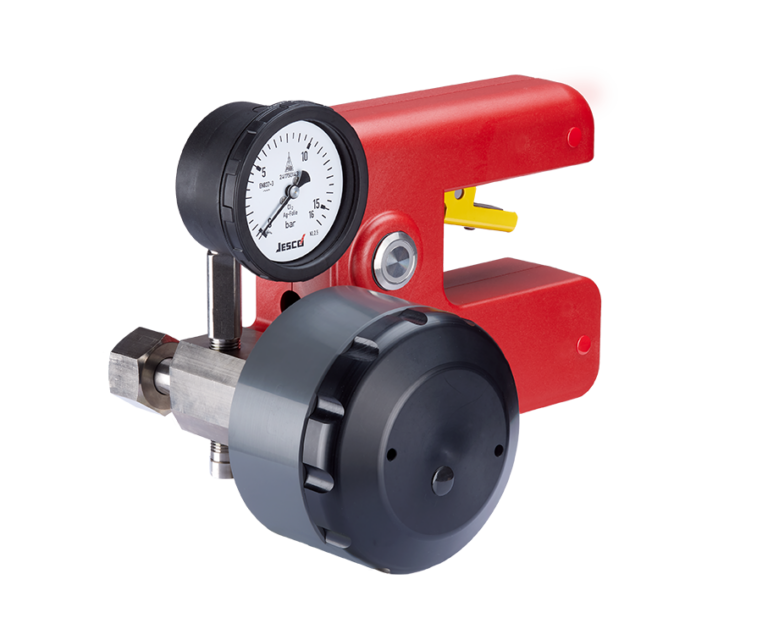
Makes chlorinators safer: the VakuStop vacuum regulator with emergency stop function (Image source: Lutz-Jesco GmbH)

The new product will be on display from 11 to 14 March 2025 at the Aquatech 2025 water technology trade fair in Amsterdam. Lutz-Jesco will also be presenting dosing pumps from the Memdos Smart series for dosing aggressive chemicals as well as electrolysis systems from the Easychlorgen and Minichlorgen series, which safely produce the disinfectant sodium hypochlorite from commercially available salt.

The new VakuStop is based on the C2213/14 vacuum regulator, which Lutz-Jesco has upgraded by adding an automatic safety valve. The system is designed as a compact device that can be fitted to the valve of a chlorine gas tank in just a few simple steps. It can also be connected to a gas warning device or the PLUS safety blow-off valve. In normal operation, the vacuum regulator enables the controlled dosing of up to 10 kg of chlorine gas (CI2) per hour into the piping system provided that there is a sufficient vacuum in the dosing line. If the negative pressure drops, for example due to a leakage, the chlorine supply is automatically interrupted. If chlorine gas escapes due to a defect in the dosing system, the electric safety valve of the VakuStop closes immediately, preventing any further escape of gas. This emergency-off function is also triggered in the event of a chlorine alarm, a cable break, if overpressure is detected or if the pushbutton is actuated. In these cases, a stop lever clearly protrudes from the housing as an indicator to signal the interruption. The valve only opens again when an employee operates the lever manually after eliminating the cause of the fault. “Chlorine gas can present a serious risk to human health – from irritation of the eyes and skin to life-threatening pulmonary oedema. With the new VakuStop, we are helping to minimise the risks involved in handling chlorine gas and further improve occupational safety in the industry,” says Heinz Lutz, CEO of Lutz Holding GmbH.

Lutz-Jesco offers the new VakuStop as part of a comprehensive safety system to increase the safety of larger chlorine gas systems. The centrepiece is a control unit that connects to a gas warning device and up to twelve VakuStops. In the event of a chlorine alarm, the control unit can close all twelve safety valves simultaneously – even during a power failure. The control unit is available with an optional integrated uninterrupted power supply (UPS). This uses twelve safety valves to guarantee safety at full loads.

More articles on this topic

Why Chlorine Gas Still Plays a Key Role in Drinking Water Disinfection After More Than 100 Years

02.09.2026 -

Romania is facing a tremendous challenge: the country must expand its water supply while at the same time ensuring that drinking water reaches consumers through extensive pipeline networks in a hygienically safe condition. This puts a spotlight on a technology that has been used in drinking water treatment for more than 100 years: chlorine gas.

Read more

Safe Drinking Water Supply Worldwide: Lutz-Jesco Expands its Research in Chlorine Gas Technology

26.08.2026 -

Lutz-Jesco is expanding its research and development in safe chlorine gas technologies. The aim is to improve the handling of chlorine gas further and to make drinking water disinfection even safer. Although chlorine gas is classified as a hazardous substance, it remains indispensable in many regions of the world for the safe and economical disinfection of large quantities of water.

Read more

Modular Disinfection Technology for Safe Drinking Water Networks Worldwide

18.02.2026 -

Millions of people around the world do not have safe access to drinking water. In many regions, the infrastructure is stretched to its limits, particularly due to industrialization and the growing population. Lutz-Jesco supports communities and operating companies with modular technology to modernize their drinking water networks. At IFAT 2026 in Munich, the company will be presenting systems for the safe dosing of chlorine gas, as well as electrolysis systems that produce disinfectants from commercially available salt.

Read more

Dosing Chlorine Gas Safely and Sustainably in an Industrial Context

20.10.2025 -

Whether for disinfecting process water, bleaching textiles or manufacturing primary materials such as PVC: chlorine gas is central to a range of industrial processes. This important chemical is also highly dangerous, and even small quantities of chlorine gas can cause irreversible damage to human health. It is therefore of vital important that users are not required to combine components from different manufacturers, thereby risking compatibility problems.

Read more