IN FOCUS

LATEST NEWS - Contracts + Case Stories

  • Data-Driven Blockage Detection Cuts Pollution

    15.05.2024 -

    Anglian Water has applied Ovarro’s data-driven early-warning technology across all rising main sewers, meaning bursts and blockages are detected before serious pollution occurs. Anglian Water pledges in its 2025-2030 draft business plan to eliminate serious pollution and reduce total number of pollution incidents by 40%, with a strategy that includes bringing in machine learning.

    Read more

    Sulzer’s Hydraulic Power Recovery Turbine Expertise to Deliver Major Operational Cost Savings

    07.05.2024 -

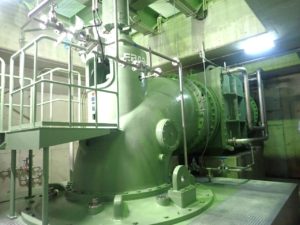
    Hydrogen and nitrogen are important gases for many industrial processes, with the former being hailed as a sustainable fuel for the future. To create ‘blue’ hydrogen, a carbon capture process that requires considerable electrical energy is needed. However, a new plant being built in Texas, will use two hydraulic power recovery turbines (HPRTs) to dramatically improve operational efficiency and reduce energy consumption.

    Read more

    Richmond Utility Uses Real-Time Analytics for Plan to Reduce Combined Sewer Overflows

    03.05.2024 -

    The city of Richmond, Virginia needed a plan to reduce combined sewer overflows (CSOs) into the James River, but how could its utility operators know which new infrastructure projects would have the biggest impact? The solution was a real-time visualization and decision support system from Xylem that identified critical infrastructure projects, helping the city develop a plan that could reduce CS0s by 180 million gallons and save costs.

    Read more

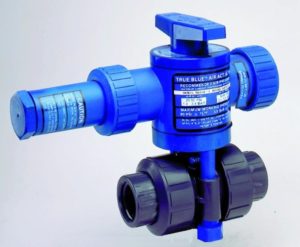
    Multi-Purpose Actuator Enables Ball Valve to Open and Close Automatically

    02.05.2024 -

    A major southern grow operation needed a valve to open and close automatically on a series of remote fertigation pipelines. The lines were in a location where compressed air and electricity were both unavailable and impractical. It was essential to have the valve close whenever the water supply dropped below operational pressure, to prevent the percentage of nutrients from exceeding safe levels and harming the crop.

    Read more