First Helium-Plasma at IPP With Technology from Oerlikon Leybold Vacuum
First helium plasma was generated at the nuclear fusion reactor Wendelstein 7-X of the Max Planck Institute for Plasma Physics (IPP) has been successful. On 10 December 2015, after more than ten years of construction and preparation, the researchers of the IPP succeeded in taking the world s largest fusion plant of the Stellarator type into pilot operation.
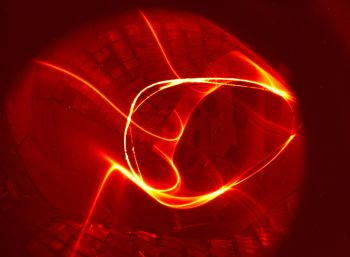
Plasma Generation within the Stellarator (Image: Max-Planck for Plasma Physics, IPP)
The scientists have fed one-milligram of helium gas into an evacuated plasma vessel and successfully ignited the first plasma in the ring using vacuum technology from Oerlikon Leybold Vacuum.
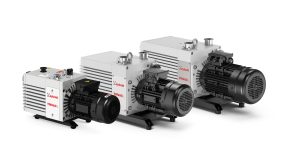
The simulation of nuclear fusion of hydrogen nuclei, which is planned for the near future, is truly ground breaking and stands a good chance to play an important role as an eco-friendly energy supply for tomorrow. One contribution to the successful implementation of this innovative concept can be attributed to the implementation and maintenance of the vacuum systems that have been in use from the early stages onward. Oerlikon Leybold Vacuum GmbH, vacuum pioneer and technology leader from Cologne has been supplying the IPP with special vacuum systems.
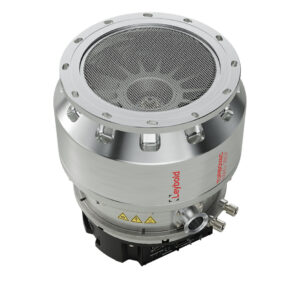
Since the turn of the millennium, much of the vacuum requirements - high vacuum, forevacuum, cryogenics and leak detectors – has been part of the research facilities of the Max Planck Institute. "The installed forevacuum pumping systems are used to start pumping the Stellarator and enable the operation of the turbomolecular high vacuum pumps like the TURBOVAC MAG 2000 W, which are used to recuperate the helium in use," explains Dr. Michael Pschyrembel, responsible for the project on the part of Oerlikon Leybold Vacuum.
The demands are enormous, as the generation of helium plasma is only feasible with temperatures of several million degrees Celsius. To achieve this, the particle mixture of ions and electrons must be held by magnetic fields in order to ensure a contact-free floating within the vacuum vessel. The ring of 70 superconducting, 3.5 meters high solenoids, surrounded by an annular steel shell, is the heart of the plant. In its evacuated interior, the coils are cooled down to superconducting temperatures close to absolute zero, so that the energy consumption after creation of the magnet field is minimal. However, this successful achievement represents only the beginning of a whole series of experiments. "In 2016, we will face some challenges, but eventually we will change to the actual research subject, the hydrogen plasma," says the project manager of the IPP, Professor Dr. Thomas Klinger. Then it will really get hot, because hydrogen plasma is ignited only when temperatures reach more than 100 million degrees Celsius.
Dr. Martin Füllenbach, CEO of Oerlikon Leybold Vacuum is pleased with these achievements: "This success makes us proud and shows once again that our technologically leading vacuum solutions contribute to basic research and pave the way for groundbreaking results."
Source: OC Oerlikon Management AG