Copper needs water – the underestimated bottleneck of electrification
Copper is developing into one of the key raw materials of the coming decades. Power grids, electric vehicles, renewable energies, and data centers require large quantities of the conductive metal. While demand is rising, developing new deposits is becoming more difficult, and existing deposits are increasingly yielding ores with lower copper content. This brings a second bottleneck into focus, in addition to the availability of the raw material: water.
The energy transition is virtually inconceivable without copper. Furthermore, new demand is being driven by digitalization and artificial intelligence. S&P Global expects global copper demand to rise from approximately 28 million tons currently to 42 million tons by 2040. Besides the traditional needs of industry and construction, power grids, renewable energies, electric vehicles, and battery storage are driving consumption in particular. The expansion of data centers is also increasingly contributing to this demand. Without additional investment, S&P Global calculates that a supply gap of around 10 million tons could emerge by 2040. The International Energy Agency (IEA) also sees significant supply risks in the long term. At the same time, new capacity cannot be created in the short term: According to the IEA, it takes an average of around 17 years from the discovery of a copper deposit to production.
In the short term, however, the picture is less clear. The International Copper Study Group (ICSG) expects global mine production to grow by only 1.6 percent in 2026 and by 2.3 percent in 2027. For refined copper, it currently even forecasts a small surplus of around 96,000 tons in 2026 and 377,000 tons in 2027. The real challenge, therefore, lies less in an imminent physical copper shortage than in the long-term development of mine supply. S&P Global points out that new large copper discoveries have become rare. From 1990 to 2025, 263 significant deposits were discovered worldwide; the most recent increase in known resources has come predominantly from expansions of existing deposits. At the same time, these deposits are becoming more difficult to access.
Another problem arises: The copper content of the mined ore is decreasing. According to the IEA, the average ore content of copper mines has fallen by around 40 percent since 1991. S&P Global confirms this trend with different data: Between 2012 and 2022, the average copper content of the extracted ore fell by 13.4 percent to 0.52 percent. For mining companies, this means, in simple terms, that significantly larger quantities of rock must be mined, crushed, and processed to obtain one ton of copper. This not only increases energy and production costs but also water consumption and the volume of process streams that need to be treated.
This becomes a particular problem where copper and water are already in competition with each other. According to the IEA, 52 percent of copper mines are located in regions with high water stress. This development is particularly evident in Chile, one of the world's most important copper producers. The Chilean Copper Commission (Cochilco) expects the water demand of copper mining to increase from 18.5 m³/s in 2024 to 20.6 m³/s in 2034. At the same time, the water supply is undergoing fundamental changes. Seawater is projected to increase its share from 40.7 percent in 2024 to 67.6 percent in 2034. Current data for 2025 already indicate this trend: Reclaimed and recirculated water covered 72.5 percent of the industry's total water usage. Seawater use increased by 4.6 percent compared to the previous year, while less continental water was extracted.
This makes water management a crucial aspect of raw material supply. Decreasing ore grades and rising demand are increasing both water consumption and the amount of processing tailings. Consequently, systems that enable the extensive recovery and reuse of process water are gaining in importance. S&P Global now also identifies water scarcity as a potentially production-limiting factor for Chilean mining. While desalination provides additional security of supply, it is energy-intensive and requires significant investment in facilities and pipelines. Water treatment, recycling, and reuse are therefore gaining economic importance.
Australia also possesses considerable growth potential in copper mining. The country is currently the world's eighth-largest copper producer, contributing approximately 3 percent to global mine production. However, according to Geoscience Australia, Australia ranks second globally in economically recoverable copper resources, accounting for around 11 percent of the world's total. In 2024, approximately 750,000 tons of copper were mined; the country has total economic resources of around 108 million tons. Given new mines and expansion projects, the Australian government anticipates further growth: revenues from copper exports are projected to increase from approximately AUD 14 billion in the 2025/26 financial year to AUD 19 billion in real terms in 2030/31.
This also increases the importance of water management. Many Australian mineral deposits are located in arid and remote regions where groundwater is a crucial, and in some cases, slowly renewable resource. Australia's science agency CSIRO estimates mining water consumption for 2023/24 at 749 gigaliters, noting that water is needed for ore processing, tailings management, cooling, and dust suppression, among other things. The resulting mine water can be saline, acidic, or heavily contaminated with dissolved minerals. Water treatment and reuse are therefore becoming an essential component of Australia's growing mining sector.
Water Treatment in Australian Mining
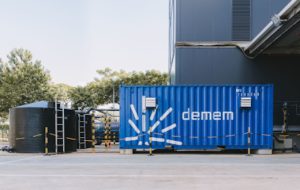
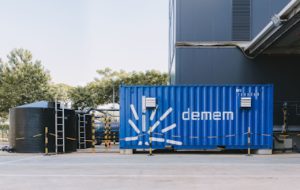
De.mem is already active in the Australian mining sector and acquired Auswater Systems in Perth in 2024. Auswater operates and maintains water and wastewater treatment plants for customers primarily in the mining sector in Western Australia and also supplies chemicals and consumables. De.mem also operates water and wastewater treatment plants at several mining sites and in mining camps in Australia.
For water technology, the price of copper is less important than the investment required as raw material extraction expands and becomes increasingly complex. As larger quantities of ore are processed and water resources become scarcer, the demands on treatment, reuse, and reliable plant operation increase.
The key factor will be how quickly new copper projects and expansions of existing mines are actually implemented. The trend indicates that the future supply of raw materials will increasingly depend on water supply – and that water technology is therefore likely to become an important component of investments in new mining capacity.
"The rising demand for copper will trigger new investments in mining. At the same time, declining ore grades and scarce water resources are making extraction more challenging. This creates a growing market for De.mem: More copper also requires more efficient water treatment," says Andreas Kröll, CEO of De.mem.
Source: De.mem Limited