Adventure Above the North Sea: Service Technician from Busch on an Offshore Mission
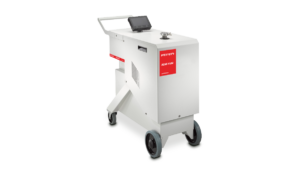
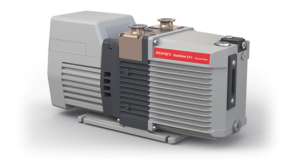
A DOLPHIN liquid ring vacuum pump from Busch Vacuum Solutions. (Image source: Busch Vacuum Solutions)
A workplace above the waves
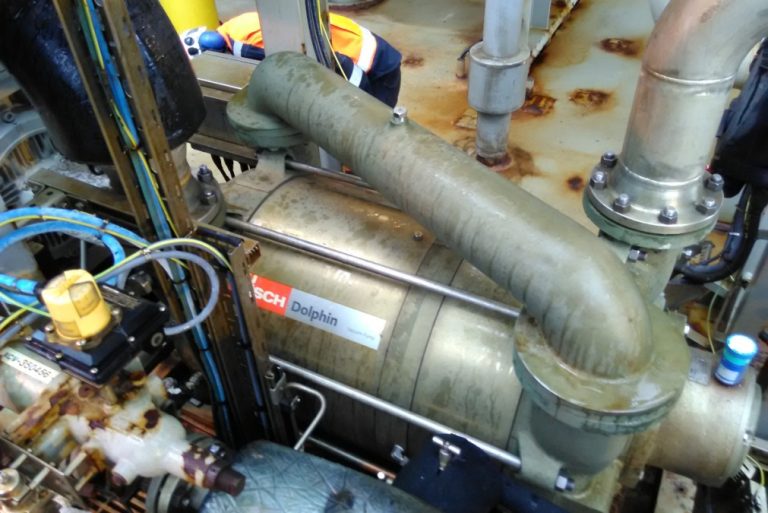
As soon as the helicopter touches down, Anders is immersed in a world of steel, pressure, and precision. Equipped with tools and diagnostic instruments, he makes his way to the heart of the operation: the vacuum system room. For the next days, the service technician from Busch inspects, maintains, and optimizes the DOLPHIN liquid ring vacuum pumps that form the backbone of the platform’s vacuum degassing system. Each pump must run flawlessly to ensure stable production. He also trains workers in handling and maintaining the vacuum pumps. “You feel the power of the sea and the machinery all around you,” says Anders. “It’s a challenging but deeply rewarding job – there is no room for mistakes out here.”
Before his first mission on the oil platform, he participated in BOSIET (Basic Offshore Safety Induction and Emergency Training) – a three-day survival course that includes helicopter evacuation, firefighting, first aid, and sea survival exercises. “It is like being in a completely different world,” he explains. “You learn to handle any situation – even jumping into the sea from a helicopter if you have to.” This course has to be renewed every four years.
Pushing the oil from the rock to the surface
The vacuum system from Busch on the platform consists of two DOLPHIN liquid ring vacuum pumps, each with two ejectors. It plays a crucial role in seawater injection – a process that keeps oil production efficient. Maintaining stable pressure inside an underground oil field is essential because it helps push the oil toward the production wells. As oil is extracted, this pressure drops. If it becomes too low, the flow of oil slows down drastically or may even stop. By maintaining pressure via seawater injection, oil recovery stays efficient as more oil can be extracted from the same reservoir. During this process, high-pressure injection pumps force the seawater down specially drilled injection wells. These wells reach into the same rock formations that hold the oil. The injected water fills the empty spaces left by the extracted oil, pushing remaining oil toward production wells and restoring reservoir pressure – a process known as injection drilling.
The role of vacuum degassing in offshore production
Before injection, gases like oxygen and carbon dioxide must be removed from the water because they promote corrosion and cause leaks in production facilities. By removing these gases through vacuum degassing, the lifetime of the pipeline is extended, and maintenance costs are reduced. It also lowers the risk of gas-related accidents and equipment failure.
In this degassing process, known as seawater deoxygenation, the seawater from the surrounding ocean is pumped into a big tower called deaerator. This tower is kept under vacuum. When water is placed under vacuum, dissolved gases become less soluble and escape from the liquid – much like opening a soda bottle, the change in pressure releases the trapped gas. After the gas is removed from the top of the tower with the help of the vacuum system, the degassed seawater collects at the bottom of the deaerator tower. From there, it is withdrawn through outlet pipes. The oxygen-depleted seawater is then sent either to high-pressure injection pumps for reservoir injection or to cooling systems on the platform. It is used to cool compressors and turbines driving oil and gas processing equipment.
Passion for precision
After a few days of demanding work under harsh offshore conditions, Anders completes his maintenance tasks and final checks. The vacuum system is running smoothly, ensuring the platform’s production continues without interruption. As he boards the helicopter for the flight back to shore, he takes one last look at the vast expanse of sea and steel beneath him. “It’s a tough job,” he says with a smile, “but also something special. Not everyone gets to work in a place like this.” Back on solid ground, he feels grateful – for the experience, the teamwork, and the knowledge that his efforts help keep such a complex operation running safely and efficiently.
Source: Dr.-Ing. K. Busch GmbH