Precision from the Ground Up: Startup and Maintenance Practices That Define Industrial Motor Reliability
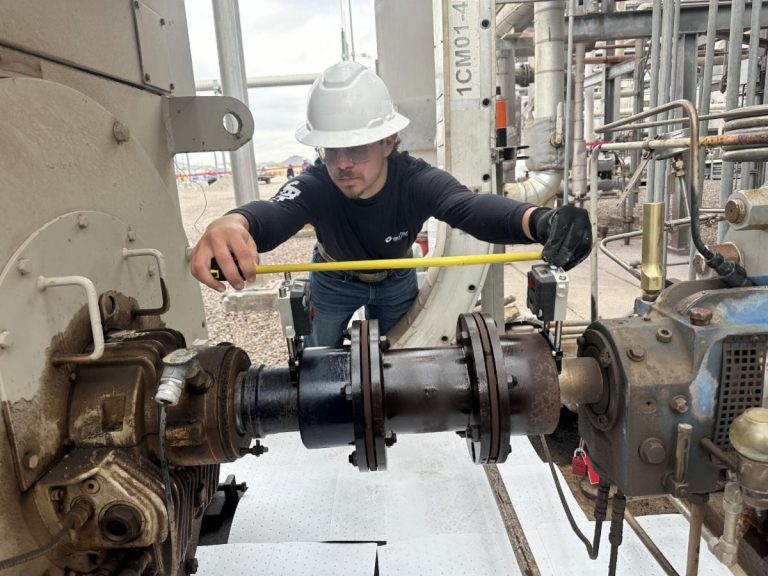
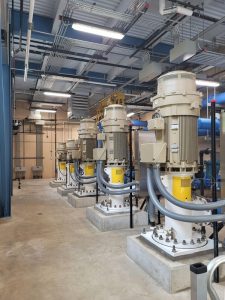
Precise cold and hot alignment verification reduces vibration risk and protects bearing life (Picture: Wolong electric America)
Field data and factory experience consistently show that many failures are not rooted in fundamental design flaws but in preventable installation and maintenance oversights. Lubrication breakdown, improper alignment, unstable foundations, and unmonitored temperatures are the quiet precursors to vibration escalation, bearing failure, insulation degradation, and unplanned downtime. For operations teams responsible for high value production assets, understanding these variables is not optional. It is the difference between controlled shutdowns and costly emergencies.
Establishing the Baseline: What Happens Before the Motor Ever Carries Load
The most consequential moment in a motor’s life often occurs before it ever turns under process load. Pre-startup inspection and baseline data collection establish the reference point against which all future performance is measured. Factory test reports represent the motor’s “as new” condition. During manufacturing, calculated design data are compared to test results to confirm that performance falls within tolerance. This documented data pack becomes the benchmark for field verification. If vibration, stator temperature, or current draw deviate significantly at startup, those differences must be investigated rather than dismissed as normal variation.
Uncoupled startup provides the first opportunity to observe the motor without load influence. Technicians monitor stator and bearing temperatures, vibration levels, voltage, and current. These measurements are not arbitrary, they are the primary indicators available to confirm proper electromagnetic and mechanical behavior. After stable operation is confirmed, coupled startup introduces load, requiring additional verification of phase balance, alignment limits, and thermal stabilization. Critically, alignment must not be treated as a one-time cold measurement. As equipment heats during operation, shaft height grows and frame geometry shifts. “Hot alignment” verification, checking alignment after thermal stabilization, prevents subtle misalignment that can dramatically shorten bearing life. Even minor parallel or angular offsets can induce sustained vibration, leading to premature failure over months or years.
Hold down bolt torque is another frequently overlooked factor. Vibration and operational cycling naturally loosen fasteners over time. If bolt torque is not re verified, micro movement at the motor feet can introduce stress into the frame, disturb alignment, and accelerate wear. In extreme cases, particularly on large machines, insufficient foundation rigidity can allow rotor and stator components to move and therefore change the airgaps thus causing unsuspecting performance and even rubbing and therefore damaging the motor and most likely causing failure.
The lesson is straightforward: baseline verification is not administrative paperwork. It is the foundation of reliability engineering.
Lubrication, Contamination, and the Slow Drift Toward Failure
In practice, the most common root cause of motor failure is neither catastrophic electrical breakdown nor mechanical defect. It is a lubrication error. Grease lubricated bearings do not fail instantly, but as the lubrication degrades, bearing failure is inevitable. Performance deteriorates gradually as grease breaks down under heat, contamination, and mechanical stress. Over lubrication can be as damaging as under lubrication, increasing internal pressure and temperature. Mixing incompatible greases may harden or soften the lubricant viscosity, compromising film integrity. Because degradation is progressive, trend analysis is essential. Oil lubricated sleeve bearings introduce additional variables. Oil level must be maintained at the correct midpoint of the sight glass under standstill conditions. Discoloration, contamination, or sludge accumulation in settling chambers indicate the need for flushing and replacement. In harsh environments like high vibration, dust, chemical vapors, or extreme temperatures, oil change intervals should be adjusted accordingly to maintain the integrity of the lubrication.
Environmental exposure directly affects maintenance scheduling. Motors installed in abrasive or electrically conductive dust environments require more frequent inspection and cleaning. High ambient temperatures accelerate lubricant breakdown. Moisture and salt laden air promote corrosion. Maintenance intervals cannot be copied from a manual without context; they must be adapted to actual site conditions. This is where predictive maintenance gains importance. Insulation resistance (IR) and polarization index (PI) measurements provide trendable indicators of winding condition. Vibration analysis, infrared thermography, and phase resistance balance testing help detect emerging mechanical or electrical irregularities before they escalate. The objective is not to eliminate maintenance but to convert reactive shutdowns into planned interventions. Downtime that is scheduled and controlled is far less expensive than downtime that arrives unannounced.
Foundations and Mounting: The Hidden Variable in Motor Performance
Foundation design is frequently underestimated in discussions of motor reliability. Yet vibration behavior is governed, not only by rotor balance and bearing condition, but by the stiffness and natural frequency of the supporting structure. Industry standards require that motors, particularly those with larger shaft heights, be tested on rigid, massive foundations that limit background vibration and avoid resonance near rotational or electrical line frequencies. If the installed foundation exhibits natural frequencies close to the motor’s operating speed or harmonic frequencies, resonance can amplify vibration dramatically.
Proper mounting practices extend beyond simply anchoring the motor frame. Sole plates or foundation caps must be rigidly attached and evenly supported. Shimming should be done with the use of full foot shims with minimal layering to maintain structural integrity. Rusted, pitted, or uneven mounting surfaces can introduce stress concentrations and distort the motor frame when bolts are tightened causing vibrations and other issues that may impact the performance and reliability of the motor.
Replacement installations present additional challenges. Foundation bolts and hole tolerances can create issues during installation such as becoming bolt bound and therefore not allowing proper alignment. It is suggested to consider Bolt hole elongation and/or bolt hole oversizing to allow margin to achieve precise shaft alignment. Failure to correct these geometric constraints can force alignment compensation, creating vibration, bearing and other issues. Foundation integrity does not merely protect the motor, it protects the entire driven system.
Monitoring, Digitalization, and the Evolving Motor Landscape
Advanced motor technologies like high efficiency induction platforms, permanent magnet designs, and digitally integrated systems are reshaping maintenance strategies, particularly in data center and process cooling applications. However, technological advancement does not eliminate fundamental mechanical realities. Bearings still require lubrication. Shafts still respond to misalignment. Windings remain susceptible to thermal stress. What changes is the granularity and speed of data available to operators. Modern monitoring systems allow continuous tracking of stator temperature rise, bearing temperature rate of change, voltage balance, and vibration signatures. Instead of reacting to absolute alarm thresholds alone, operators can evaluate trends and detect subtle upward shifts that signal lubrication degradation or airflow obstruction before alarm conditions are reached.
Wolong Electric America’s GE motor platforms operate across demanding industrial sectors where reliability expectations are high and downtime costs are significant. In these environments, advanced motor design must be paired with disciplined installation, foundation engineering, and predictive maintenance practices. Technology enhances visibility, but disciplined execution sustains performance. Ultimately, the purpose of startup protocols and maintenance schedules is control. Facilities that monitor baseline data, verify alignment under operating temperature, maintain lubrication integrity, and respect foundation and installation design principles gain the ability to choose when equipment comes offline. Those that do not may find their schedule dictated by failure. Industrial motors are robust machines. But reliability is not automatic. It is engineered, first at the factory, then at the installation, and finally in the discipline of daily operation.
Source: Wolong Electric America