Flow Measurement of Hot Dilution Water for a Sugar Centrifuge
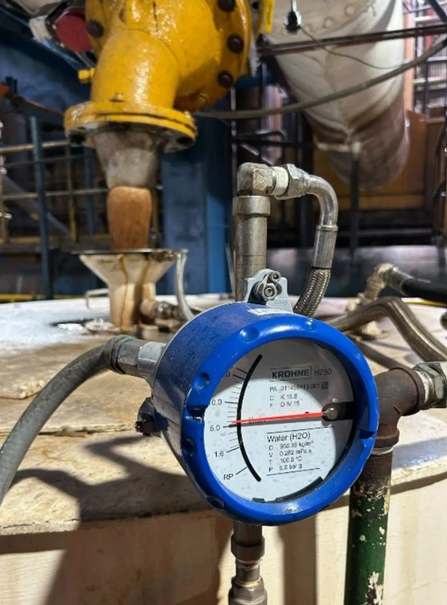
The H250 M40 variable area flowmeter measuring hot dilution water for sugar separation in a centrifuge. (Image source: KROHNE Messtechnik GmbH)
Background
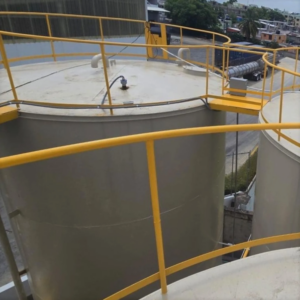
A producer of bioethanol, sugar and molasses operates a sugar mill in Nicaragua that primarily produces brown and refined sugar from sugar cane juice. The production process follows the traditional steps of concentration, crystallisation and separation, while complying with the strictest international quality standards.
Measurement requirements
During the crystallisation process, massecuite – a thick and viscous mixture of syrup and sugar crystals – is formed by boiling the syrup under vacuum. The massecuite is then separated into solid sugar crystals and liquid molasses using continuously operating, high-speed centrifuges. The separation follows a three-stage centrifuge process, starting with the processing of crystal-rich A massecuite and progressing through to C massecuite, which represents the final molasses stream from the previous separation stages. C massecuite contains a lower proportion of sugar crystals along with a high content of mother liquor. The resulting sugar (C sugar) is typically recirculated and used as seed material in the crystallisation process, while the remaining liquid is discharged as final molasses.
To purify the sugar crystals from remaining molasses residues and reduce viscosity in its C massecuite centrifuges, the customer adds hot water to these centrifuges. The addition of hot water is key to an effective final separation process for sugar recovery. The customer therefore required a reliable and cost-effective flowmeter to monitor the dilution water being added.
The environmental conditions at the installation point are demanding due to elevated operating temperatures of up to +100°C / +212°F, high humidity and a relatively low flow range (6 …10 l/min / ~1.6–2.6 US gpm). In addition, installation space is limited, with restricted straight inlet and outlet runs.
KROHNE Solution
The sugar producer selected 12 units of the H250 M40 variable area (VA) flowmeter for measuring the hot water fed into the centrifuges. The cost-effective KROHNE meter is an extremely versatile flowmeter, offering a wide range of configuration options and adaptability to different process conditions. With a broad selection of wetted materials, process connections, as well as pressure and temperature ratings, it can be tailored to suit many applications. Thanks to its modular design, the H250 M40 can be supplied either as a purely mechanical instrument without power supply or as a fully equipped flowmeter with digital fieldbus communication output.
In this application, the VA flowmeter was installed with a ½ NPT threaded connection in a pipework system consisting of small-diameter steel pipes and hoses. As the variable area flowmeter does not require straight inlet and outlet runs, the confined installation space was not an issue.
As specified by the customer, the H250 M40 was supplied as a 2-wire device with a 4–20 mA / HART output for transmitting all measured values to the control room, where process parameters are centrally monitored. In addition, the large, clearly visible local display of the H250 M40 enables easy on-site inspection by plant personnel.
Customer benefits
The H250 M40 helps the customer maintain a stable separation process without over- or underfeeding the centrifuge with water. This ensures effective washing of the crystallised sugar and efficient sugar recovery. The customer can monitor the water flow rate in each centrifuge both via the central control room HMI and locally on site.
The customer benefits from a cost-effective yet highly adaptable flowmeter. The modular design of the H250 M40 electronics provides investment protection. It can be easily upgraded from analogue output to Foundation Fieldbus or PROFIBUS PA, with additional functionality such as totalisation and advanced diagnostics, e.g. for detecting pulsating flow or float blockage. All of this is possible without process interruption or opening the pipeline.
Source: KROHNE Messtechnik GmbH