Busch Switzerland Celebrates Its 50th Anniversary
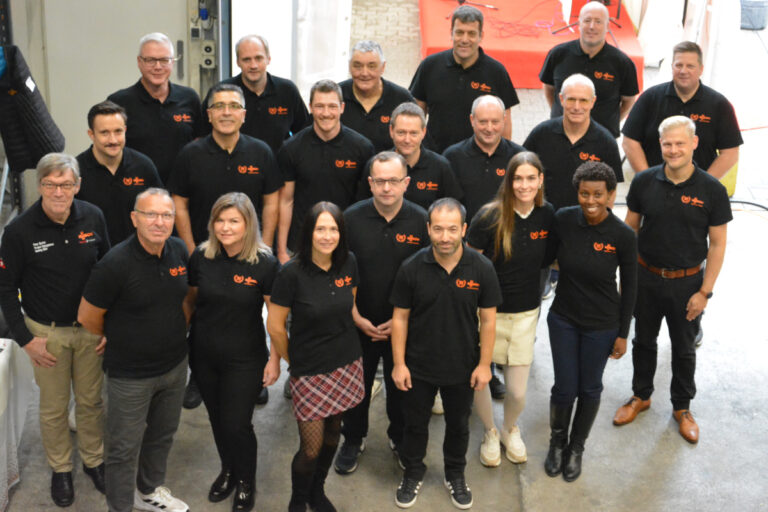
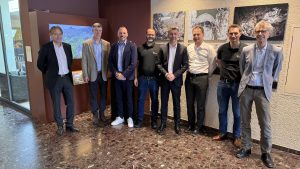
The team of Busch AG. (Image source: Busch AG)
Live music welcomed the guests to a festively decorated tent where candles in the company color created a warm and inviting atmosphere. Sami and Kaya Busch, Co-CEOs and Co-owners of the Busch Group, also attended with their families. The event offered a variety of activities and delicious food.
The anniversary celebration was not only an opportunity to strengthen the community of employees and enjoy the family atmosphere at Busch AG, but also a possibility to review the company’s successful history.
Max Zulauf Wyss was the first to manage Busch AG in Binningen since 1974, before the company moved to an office in Muenchenstein. At the beginning of the 1980s, the company relocated to Muttenz. Under the leadership of Hans Steybe, the Busch building in Magden was built and the company moved into it in April 1993. In the same year, the COBRA vacuum pump was introduced by Dr Busch and put into operation for the first time at the Swiss pharmaceutical production company Lonza, representing a highlight in the history of Busch AG. Another landmark was when the first COBRA NC vacuum pumps were used in steel degassing in 2002.
Under the leadership of Christian Muser, who has been general manager of Busch AG since May 2005, another milestone in the company’s history is now in the making: The joint Swiss sales, systems building, and service center of Busch and Pfeiffer is currently being constructed in Sisseln, in the canton of Aargau. The new building will be completed in October 2025. From January 2, 2026, the 34 employees of Busch AG will move onto the premises. On March 1, 2026, the colleagues of Pfeiffer Switzerland will follow, allowing both Swiss Busch Group companies to work together under one roof and collaborate for the benefit of customers.
“We are looking forward to growing together as a company and further expanding our leading position on the Swiss market. The new building gives us the opportunity to grow, especially in service and systems building, and to offer our customers outstanding vacuum solutions from a single source. After all, the satisfaction and loyalty of our customers is our company’s most important asset,” emphasizes Christian Muser.
To support its customers in the best possible way, Busch AG regularly organizes seminars on vacuum solutions for the chemical and pharmaceutical industries.
Source: Dr.-Ing. K. Busch GmbH