ADT Harnesses Machine Learning and Inverse Design to Deliver a New Era of Pump Efficiency
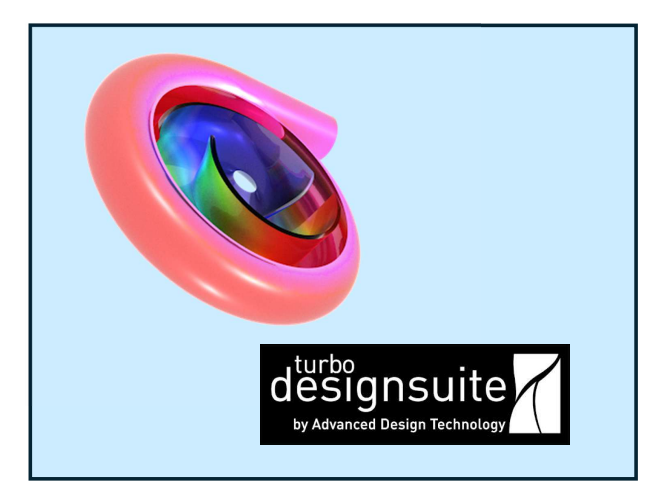
Image source: Advanced Design Technology Ltd
Through a programme of test drives and webinars, pump manufacturers and fluid dynamics engineers are invited to join this drive toward a more efficient future.
The Global Efficiency Challenge
Pumps are one of the largest users of energy in industrial and infrastructure systems worldwide, and as a result energy costs are central to pump operations. Energy dominates the total cost of pump ownership, and even small improvements in efficiency can deliver significant financial and environmental benefits. Yet pump design has long been hindered by a “performance paradox”: engineers must constantly balance critical trade-offs such as stage efficiency, with other factors such as clogging resistance and cavitation margins.
The industry is also facing a crisis of resources:
- Rising Costs: Ever-increasing CFD (Computational Fluid Dynamics) evaluation costs are straining R&D budgets.
- Time Constraints: Traditional design cycles are often too slow to meet the urgent demand for high-performance, energy-efficient solutions.
- Complexity: Conventional “direct design” methods—where geometry is defined before flow is analysed—require exhaustive, section-by-section iterations.
ADT’s Strategy: Engineering the Future
To address these global challenges, ADT is deploying its TURBOdesign Suite to fundamentally change how pumps are conceived. Unlike conventional approaches, ADT utilises 3D Inverse Design technology. Instead of creating a geometry and then testing it, designers define the desired blade loading distribution (the pressure and velocity fields). ADT’s software then computes the exact blade geometry required to achieve that performance. This reduces the dimensionality of the design space, allowing engineers to simply specify metrics like flow rate and pump head to find the optimal solution quickly.
To further accelerate this shift, ADT are integrating Machine Learning tools into TURBOdesign Suite to create Reactive Response Surfaces which map the relationship between key design parameters and hydraulic performance outcomes across the full design space. The practical impact of this development is substantial as R&D teams can explore a far broader design space without incurring proportionally higher simulation costs — and crucially, the entire process runs on standard desktop hardware.
Initial Strategic Focus: Waste-Water Management
As the first major activity of this initiative, ADT is applying its advanced tools to the unique challenges of Waste-Water Pump Design. Waste-water systems represent a unique engineering hurdle where efficiency must coexist with the ability to handle solids without clogging. Using the TURBOdesign Suite, engineers can now specify “solid size” as a primary metric alongside hydraulic and suction performance, ensuring that the resulting 3D impellers are both highly efficient, robust against clogging and meet cavitation requirements—an essential combination for modern waste-water infrastructure.
Source: Advanced Design Technology Ltd