Whitepaper: Select the Right Pump before Errors Get Costly

27.10.2026
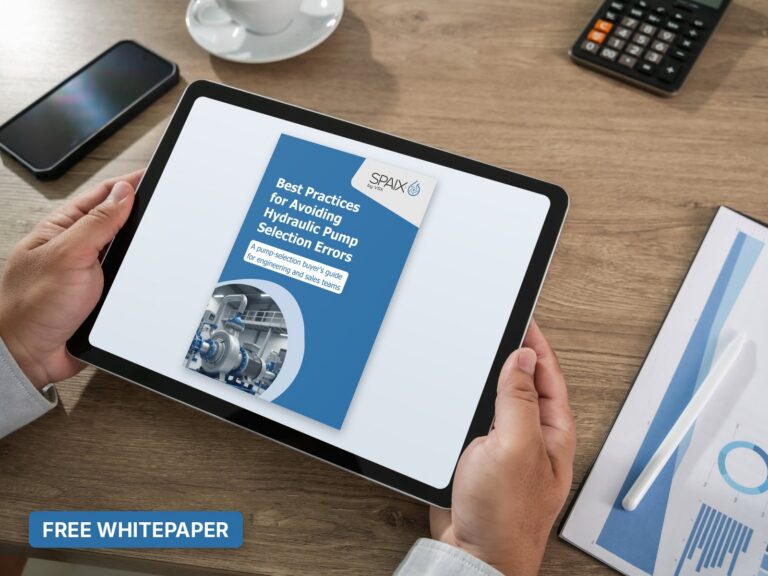
Seven pump selection errors that stay invisible at quote time – from NPSH margins to viscosity correction. The free VSX whitepaper “Best Practices for Avoiding Hydraulic Pump Selection Errors” shows engineering and sales teams how to spot them early, what they cost and which standards apply. Includes an 8-point pre-selection checklist.
Whitepaper: Select the Right Pump before Errors Get Costly

Image source: VSX - VOGEL SOFTWARE GmbH

The datasheet looks right, the duty point matches and the order goes through. The problems only show up months later, as cavitation, an overheating motor, clogged impellers or energy bills well above plan.

The seven errors at a glance

  • NPSH margins: why the minimum often isn’t enough
  • Booster oversizing: the costly safety factor
  • Motor thermal derating: what happens at high ambient temperatures and altitudes
  • Sewage pump sizing: choosing the right impeller for ragging-prone media
  • Operating point drift: when the real system curve differs from the plan
  • Viscosity correction: an error that is often overlooked with non-water media
  • Parallel pump selection: the trap in the combined curve

Grounded in practice

The authors are application engineers who selected pumps at manufacturers before they started writing selection software. Two case studies show what correct selection achieves. In one, a high-rise booster replacement cut energy use by 28 percent. In the other, a municipal lift station ended its monthly de-ragging after an impeller change.

More articles on this topic

Why the Pumps Industry Is Moving Past the Spec Sheet

26.10.2026 -

In a contributed article, Adrian van Wyk, Managing Director of Referro Systems, explains why purchase price, motor power and flow curves are losing weight in pump selection. He points to lifecycle cost, efficiency across the actual operating range and the limits of predictive maintenance without matching maintenance processes.

Read more

How Energy-Efficient Vacuum Technology Improved Paper Sack Production

25.09.2026 -

Vacuum technology is indispensable in paper sack manufacturing. It plays a vital role at several critical stages of the production process. At dy-pack, suction cups mounted on small robotic arms grip the sides of each sack blank, lift it from the stack and position it for the next process step. Vacuum ensures that the sacks are aligned one after the other so that the bottom can be opened in a controlled manner.

Read more

Control and Pumping Speed: Matching Capacity to Demand for Maximum Efficiency

04.09.2026 -

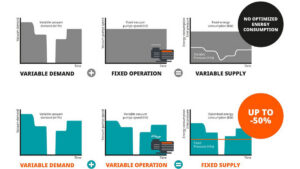
One of the most effective ways to improve the energy efficiency of a vacuum system is to ensure that the operating capacity of the vacuum pump is aligned with the actual needs of the process. A vacuum pump that runs at full speed when the process demand is low wastes energy and can cause unnecessary wear on equipment, reducing service life. By implementing intelligent control systems and variable speed drives (VSD), energy consumption can be significantly cut, leading to lower operating costs and a reduced carbon footprint.

Read more

How to Manage Heat in Vacuum Systems?

31.08.2026 -

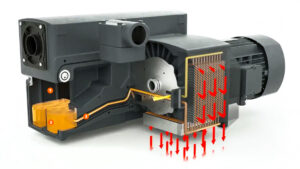
Every vacuum pump converts electrical energy into mechanical work. Inevitably, much of that energy becomes heat, resulting from heating in motor windings, friction between moving parts, and gas compression. While heat generation is unavoidable, how it is managed influences not only the efficiency of the vacuum pump, but can also affect the efficiency of other associated systems and equipment located nearby.

Read more

BPMA: Delivering AMP8 Will Require More Than Investment

28.08.2026 -

The UK water sector’s AMP8 programme will invest more than £100 billion in infrastructure over five years. In this guest comment, BPMA Technical Officer Gary Wilde argues that success will depend on more than capital alone — whole-life procurement, resilient supply chains and investment in skills and technology.

Read more