Major Project in Central Asia: Rheinhütte Pumpen Supplies Pump Package for Zinc Smelter
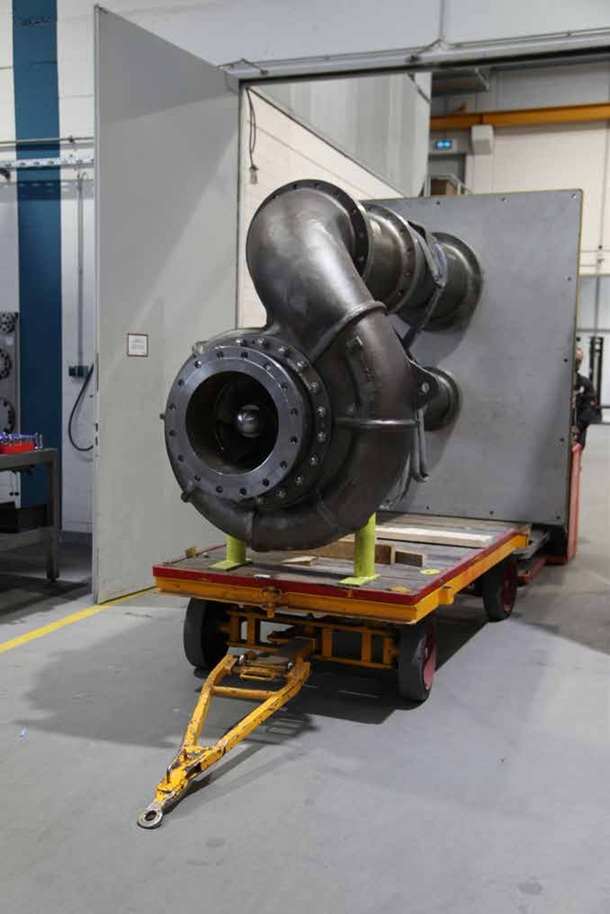
A GVRN pump is transported to the paint shop after assembly. (Image source: © ITT RHEINHÜTTE Pumpen GmbH)
The Application: Sulfuric Acid as a Core Component of Metallurgy
In zinc smelting, sulfuric acid plays a central role in metallurgical processing. Sulfidic ores are oxidized in roasters at temperatures between 500 and 1,100 °C under controlled oxygen supply. The resulting sulfur dioxide is converted into sulfur trioxide via the contact process and subsequently into highly concentrated sulfuric acid. This acid is then used to further leach the roasted ore or is applied in ownstream chemical processes. Pumping this medium places extreme demands on pump technology: the acid is strongly oxidizing, very hot, and may contain solid particles such as ceramic catalyst residues. Flow velocities, temperature fluctuations, and abrasive behavior can push conventional materials to their limits. Only specially developed metallurgical alloys and pump designs provide long‑term resistance to these conditions.
The Project: Heavy‑Duty Pump Technology for Extreme Conditions
For the new facility, ten vertical GVRN pumps were supplied, complemented by a mobile RN pump for maintenance operations. The GVRN units rank among the most powerful pumps in their class and together handle around 7,000 m³ of highly concentrated sulfuric acid per hour. The required electrical connected load amounts to approximately two megawatts.
The delivery also includes the largest GVRN size developed in 2025. All GVRN pumps were manufactured entirely from the high‑alloy specialty material 1.4136S. This ferritic cast stainless steel offers exceptional resistance to highly concentrated, oxidizing sulfuric acid and combines outstanding corrosion, erosion, and abrasion resistance.
Consistent use of this material across all units ensures long‑term reliability under extreme process conditions, including high flow velocities and potential solid‑particle loading. The pumps are complemented by shafts made from RHRS (similar to 1.4136S) and specially engineered bearing materials designed to maintain optimal operational safety under these challenging chemical and mechanical influences.
The mobile RN pump plays a key role in the plant’s maintenance concept and is used exclusively for tank emptying during scheduled service operations.
Material Expertise: 1.4136S as the Key to Success
The core technical challenge in this project is the material itself. Highly concentrated sulfuric acid is among the most corrosive media in the chemical industry. The 1.4136S alloy developed by Rheinhütte Pumpen is based on standard grade 1.4136 but has been significantly enhanced.
Its high chromium content forms a particularly dense and stable passive layer under oxidizing conditions, ensuring strong corrosion protection. A precisely balanced carbon content enables an ideal combination of general corrosion resistance with excellent erosion and abrasion resistance. Thanks to its hardness and additional copper alloying, 1.4136S is particularly suitable for media that exhibit both corrosive and abrasive characteristics. This is especially critical in sulfuric acid systems where ceramic catalyst particles may be present. Compared with austenitic, duplex, or unalloyed steels, it withstands significantly higher flow velocities – a decisive advantage for high‑performance pumps in sulfuric acid circuits.
Unique Testing Capability: Vertical Pumps up to 19 Meters Tested Under Real Conditions
Rheinhütte is the only manufacturer worldwide capable of fully testing vertical sulfuric acid pumps of this type. The basis for this is the pump test stand commissioned in 2015, one of the most advanced facilities of its kind. The 20‑meter‑deep test pit enables testing of vertical pumps up to 19 meters in total length – a crucial advantage for precise tuning of large and heavy pumps to customer specifications.
The test stand features state‑of‑the‑art instrumentation, fully automated test sequences, and the capability to test multiple pumps in parallel. Measurements are automatically interrupted when defined limit values are exceeded, ensuring safe and reproducible quality assurance. Witness tests can be performed on‑site or via live video transmission, providing customers worldwide with real‑time insight into the testing process. Upon request, customized documentation can be prepared according to project‑specific requirements.
Source: ITT Rheinhütte Pumpen GmbH