Guaranteed Pumpability: SEEPEX FlowShred Conditions Fibrous and Bulky Waste for Smooth Conveying

29.04.2026
SEEPEX expands its portfolio with FlowShred, a solid conditioning system featuring a twinshaft grinder that efficiently reduces heterogeneous organic waste from food production and converts it into a pumpable medium. The compact, pre-assembled system combines mechanical size reduction with conveying via an integrated progressive cavity pump, ensuring stable processes, continuous throughput, and minimal downtime.
Guaranteed Pumpability: SEEPEX FlowShred Conditions Fibrous and Bulky Waste for Smooth Conveying
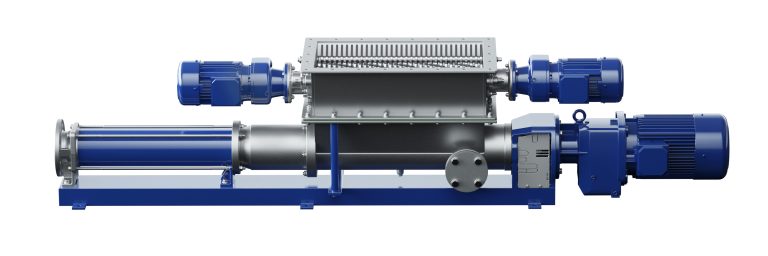
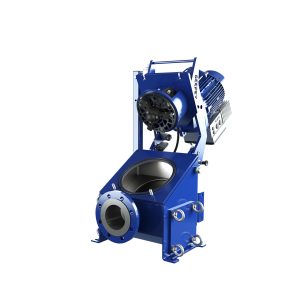
SEEPEX expands its portfolio with FlowShred, a compact system that grinds organic food waste into pumpable material, combining size reduction and pumping for stable, continuous operation and reduced downtime. (Picture: Seepex Ltd.)

Technical Key Parameters:

  • Target particle size: 10–20 mm, optimized for pumpability
  • Cutting tools: hardened, corrosion-resistant martensitic stainless steel
  • Cutting geometry: snail geometry with varying radius and tooth profile for optimized material intake
  • Drive: high torque at low speed for reduced energy consumption
  • Conveying: progressive cavity pump with open hopper, installed directly below the grinder
  • Optional: Smart Air Injection for extended conveying distances

The coordinated interaction of twin-shaft grinder and progressive cavity pump produces a consistently homogeneous medium, even with widely varying material consistencies. The snail geometry ensures continuous intake of bulky or fibrous materials, preventing bridging at the inlet and maintaining a stable material flow.

Operation and Process Flexibility:
FlowShred supports both continuous and intermittent feeding, allowing flexible integration into different production processes. Hardened stainless steel cutting tools reduce wear, minimize downtime, and lower maintenance requirements. At the same time, the enclosed system design ensures clean operation with minimal odor emissions.

Applications and Benefits:

  • Food production: fruit and vegetable processing, frozen products
  • Slaughterhouses and meat processing: efficient handling of by-products
  • Fish processing: reliable shredding and homogenization with reduced odor and handling issues
  • Biogas plants: increased surface area for faster degradation and improved gas yield

The integrated design ensures reliable transfer of material to collection containers for pickup by external disposal providers or on-site storage systems. Its modular design enables fast and straightforward integration into existing production or waste handling environments.

SEEPEX FlowShred combines process reliability, energy efficiency, and mechanical robustness in a single system. It converts a wide range of food waste into a stable, uniformly conditioned, pumpable medium, reducing operating costs and downtime while enabling flexible integration across industrial applications.

Source: SEEPEX Inc.
More articles on this topic

How Energy-Efficient Vacuum Technology Improved Paper Sack Production

25.09.2026 -

Vacuum technology is indispensable in paper sack manufacturing. It plays a vital role at several critical stages of the production process. At dy-pack, suction cups mounted on small robotic arms grip the sides of each sack blank, lift it from the stack and position it for the next process step. Vacuum ensures that the sacks are aligned one after the other so that the bottom can be opened in a controlled manner.

Read more

Control and Pumping Speed: Matching Capacity to Demand for Maximum Efficiency

04.09.2026 -

One of the most effective ways to improve the energy efficiency of a vacuum system is to ensure that the operating capacity of the vacuum pump is aligned with the actual needs of the process. A vacuum pump that runs at full speed when the process demand is low wastes energy and can cause unnecessary wear on equipment, reducing service life. By implementing intelligent control systems and variable speed drives (VSD), energy consumption can be significantly cut, leading to lower operating costs and a reduced carbon footprint.

Read more

How to Manage Heat in Vacuum Systems?

31.08.2026 -

Every vacuum pump converts electrical energy into mechanical work. Inevitably, much of that energy becomes heat, resulting from heating in motor windings, friction between moving parts, and gas compression. While heat generation is unavoidable, how it is managed influences not only the efficiency of the vacuum pump, but can also affect the efficiency of other associated systems and equipment located nearby.

Read more

BPMA: Delivering AMP8 Will Require More Than Investment

28.08.2026 -

The UK water sector’s AMP8 programme will invest more than £100 billion in infrastructure over five years. In this guest comment, BPMA Technical Officer Gary Wilde argues that success will depend on more than capital alone — whole-life procurement, resilient supply chains and investment in skills and technology.

Read more

Efficiency in Motion: Why Sustainable Pumping Must Be a Strategic Priority

23.04.2026 -

Energy efficiency is no longer a peripheral consideration for the UK pump industry — it is now central to how the sector innovates, competes and contributes to national sustainability goals. Given that pumping systems account for a significant proportion of electricity use across industry, utilities and building services, the opportunity to reduce energy consumption — and associated carbon emissions — is both substantial and urgent.

Read more

SEEPEX BN Pumps with Smart Joint Access Enhance Efficiency in Rock Blasting Operations

18.03.2026 -

SEEPEX has introduced BN pumps with Smart Joint Access (SJA), engineered for the reliable and precise transfer of abrasive, corrosive, and chemical media in mining and construction. Designed for rock blasting, the pump features a large inspection opening for quick joint checks, a compact footprint for mobile or skidmounted installations, and flexible drive and material options for consistent performance and uptime.

Read more