London Schools at Risk of Flooding Benefit from SuDS
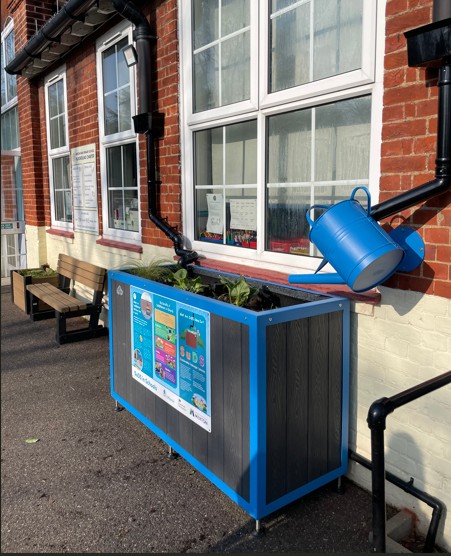
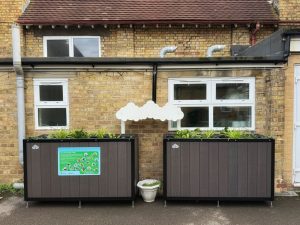
A SuDSPlanter unit installed at one of the seven Merton schools, capturing roof runoff via a diverted downpipe to reduce playground flooding while giving pupils a hands-on planted habitat to help maintain. (Image source: Sudsplanter Ltd)
Part-funded through the SuDS in Schools programme and supported by the Department for Education, the project aligns with the ‘capture’ principle within the London Surface Water Strategy.
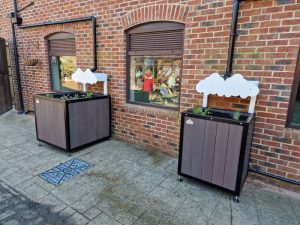
Sudsplanter designs and manufactures modular rain gardens called SuDSPlanters, which divert roof runoff from downpipes directly into planted features, rather than allowing it to enter the sewer network immediately.
Each SuDSPlanter unit is engineered as a layered system that combines attenuation, filtration and storage. Rainwater is captured within a specially designed soil mix and underlying reservoir, where it is temporarily stored and gradually released at a controlled rate.
This process mimics natural drainage, significantly reducing peak flows entering the sewer system during storm events and helping to mitigate the risk of sewer surcharge and localised surface water flooding.
Following site selection, Sudsplanter’s surface water management specialists visited each school with a council officer to identify where installations would deliver the greatest benefit, looking at areas such as drainage systems, roofs and downpipes.
As the project was required to provide a defined level of flood protection, Sudsplanter used modelling tools to calculate projected storage and attenuation capacity, ensuring the scheme met Department for Education key performance indicators for aspects including design, installation and maintenance.
The calculations showed installation of 29 SuDSPlanter units across seven schools would:
- Reduce peak discharge to sewer per downpipe of between 81 and 95%
- Withhold 24.49m³ of rainwater upstream of sewer network, releasing it later at low rates
- Provide total roof rainwater attenuation volume of 14.7m3
Between three and six bespoke SuDSPlanter units were installed at each school, with plant varieties selected by horticulturalists according to local conditions and site aspect. SuDSPlanter’s education specialists ran sessions with pupils to teach them about the water cycle, sustainable drainage systems (SuDS), and how to care for the plants and the new habitats.
Long-term maintenance of the SuDSPlanter systems will be led by each school, encouraging local ownership and ensuring day-to-day care is sustainable. The council will carry out annual check-ins to gather updates on performance.
Bethan McGregor, Climate Projects Officer at London Borough of Merton, said: “Surface water flooding is one of the primary sources of flood risk in Merton, occurring during heavy rain when the ground is unable to absorb the water and the drainage system is overwhelmed.
“That’s why we were pleased to secure SuDS in Schools funding for seven sites that had been impacted by surface water flooding. Sustainable drainage systems are an important feature in our local flood strategies – and schools offer unique opportunities to address risk while creating educational and biodiversity benefit.
“The SuDSPlanters have delivered tangible benefits. In just one of many examples, one school reported its playground, which usually floods after rain, has not flooded since the planters were installed in December.”
Lorna Davis, Sudsplanter director, said: “By installing SuDSPlanter units, Merton Council has provided these schools with an ongoing engagement resource which provides water quality benefits, flood protection, biodiversity enhancements, education tools and health and wellbeing benefits to name but a few.
“The project was part-funded by the Department for Education - we’d encourage local authorities in areas impacted by flooding to explore similar funding opportunities.”
Source: Sudsplanter Ltd